Soakaways fail in North London. Not occasionally — routinely, predictably, and often within a decade of installation. Barnet, Enfield, and Haringey have some of the deepest deposits of London Clay in the Greater London area, and London Clay is almost completely impermeable to water. A soakaway depends entirely on the surrounding soil absorbing water. In heavy clay, water does not absorb — it sits.
Understanding why soakaways fail in these boroughs, what the signs look like, and what the alternatives are will save homeowners significant money and prevent the garden flooding and foundation problems that a failed soakaway causes.
What London Clay Does to a Soakaway
The permeability problem
A soakaway is a rubble- or crate-filled pit that receives surface water from roof drainage, patio drainage, or driveway run-off. The water fills the pit and then slowly percolates into the surrounding soil. The system works — but only if the surrounding soil has sufficient permeability to absorb the water faster than it enters the pit.
London Clay has a hydraulic conductivity of approximately 0.001–0.01 metres per day. That means it absorbs roughly 1mm of water per day under gravity. Compare that to sandy or gravelly soils, which can absorb several hundred millimetres per day. For practical purposes, London Clay does not drain at a useful rate. A soakaway in pure London Clay is not a drainage system — it is a holding pit that slowly overflows.
Building Regulations guidance (BRE Digest 365) requires a percolation test before soakaway installation. In Barnet, Enfield, and Haringey, a correctly conducted percolation test almost always indicates that a soakaway is not suitable for the site. Yet soakaways have been installed in North London gardens for decades — many by builders who conducted the test in dry summer conditions (when temporarily improved permeability can give a misleadingly favourable result) or who did not test at all.
Seasonal saturation cycle
London Clay's permeability decreases further during wet periods because the clay swells with moisture, filling whatever micro-pore space allowed limited water movement in drier conditions. The result: a North London soakaway may function marginally in a dry summer but fails completely from October onwards, when the clay is fully saturated and unable to accept any further water. This creates the paradox that the soakaway performs worst when it is most needed.

Signs of Soakaway Failure in North London Properties
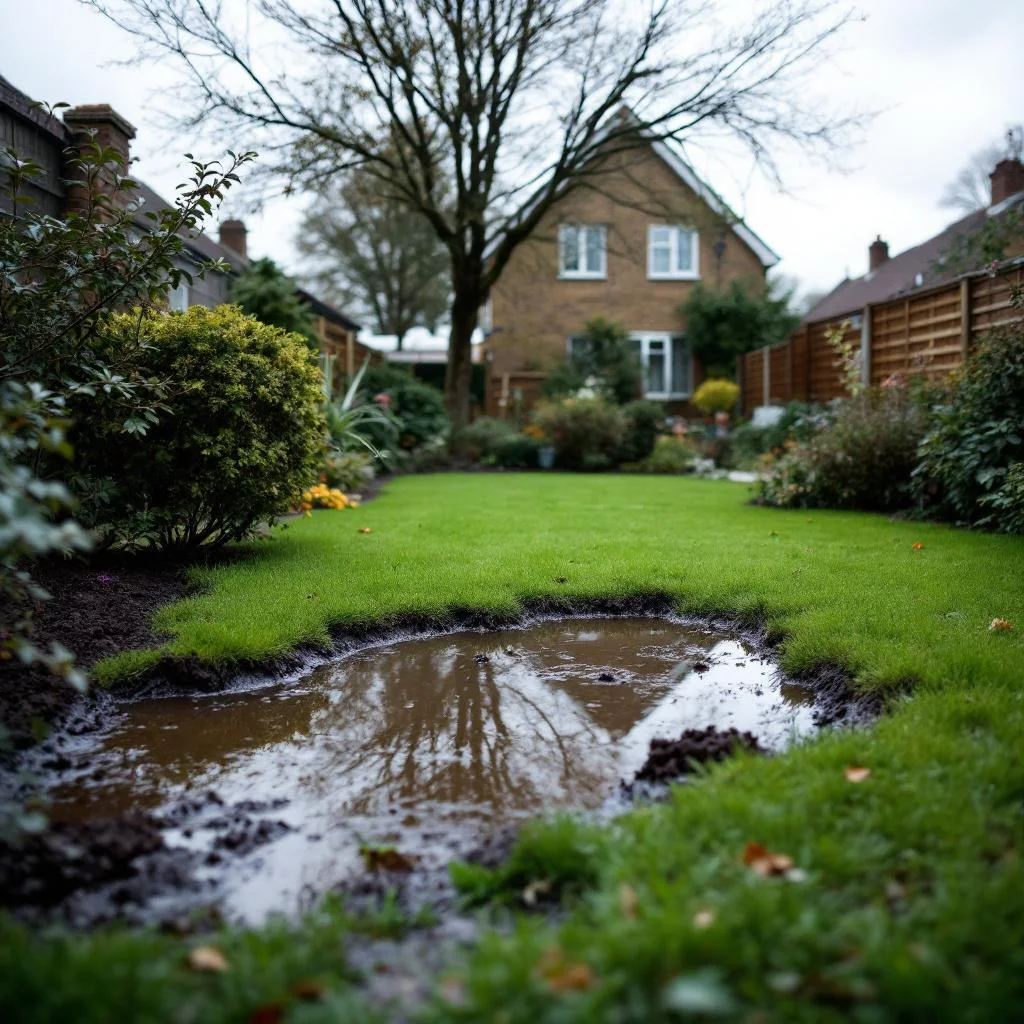
- Persistent lawn waterlogging over or near the soakaway pit — wet patches that do not dry out between rain events, particularly from October to April
- Patio or driveway pooling — surface water that previously drained quickly now pools for hours or days
- Overflowing gulley or downpipe connection — the soakaway is full and water backs up to the connected surface
- Subsidence or ground movement near the soakaway — as the continuously waterlogged ground loses load-bearing capacity
- Damp in an adjacent outbuilding or boundary wall — a saturated soakaway can raise the local groundwater table above the damp-proof course level of nearby structures
Any of these signs in a Barnet, Enfield, or Haringey property with a soakaway warrants an assessment before further ground saturation causes structural damage.
What Replaces a Failed Soakaway in Clay Soil
Connection to the surface water sewer
Where a surface water sewer runs within reasonable distance of the property, connection to it is the preferred alternative to soakaway drainage. Thames Water permission is required for new connections to the public surface water sewer, and the connection must meet current drainage regulations. The physical connection requires excavation and a new lateral drain to the sewer, priced according to the distance and depth involved.
Our drain repair service in Barnet, Enfield, and Haringey includes assessment and installation of surface water sewer connections.
Attenuation and slow release
Where a sewer connection is not feasible — distance, cost, or Thames Water refusal — an attenuation system provides a managed alternative. A large-capacity underground crate system stores the peak rainfall volume from the roof or paved area, then releases it to either a shallow French drain (which may work in a thin sandy layer above the clay) or a controlled flow outlet to the drainage system. The key difference from a soakaway is that an attenuation system is not relying on the clay to absorb water — it is simply managing the timing of the discharge.
French drain to a ditch or watercourse
Some North London properties, particularly in the outer reaches of Enfield and Barnet near the Lee Valley or smaller watercourses, can discharge surface water to a natural watercourse via a French drain. This requires consent from the relevant drainage authority and must not increase flood risk downstream.
Addressing the cause: reducing impermeable surface area
In many cases, a failing soakaway is overwhelmed not because it was wrongly specified but because additional impermeable surface has been added to the property since it was installed — a new extension, a paved garden, an enlarged driveway. Permeable paving for driveways (which discharges through the surface rather than to a soakaway) can reduce the load on an existing soakaway significantly.
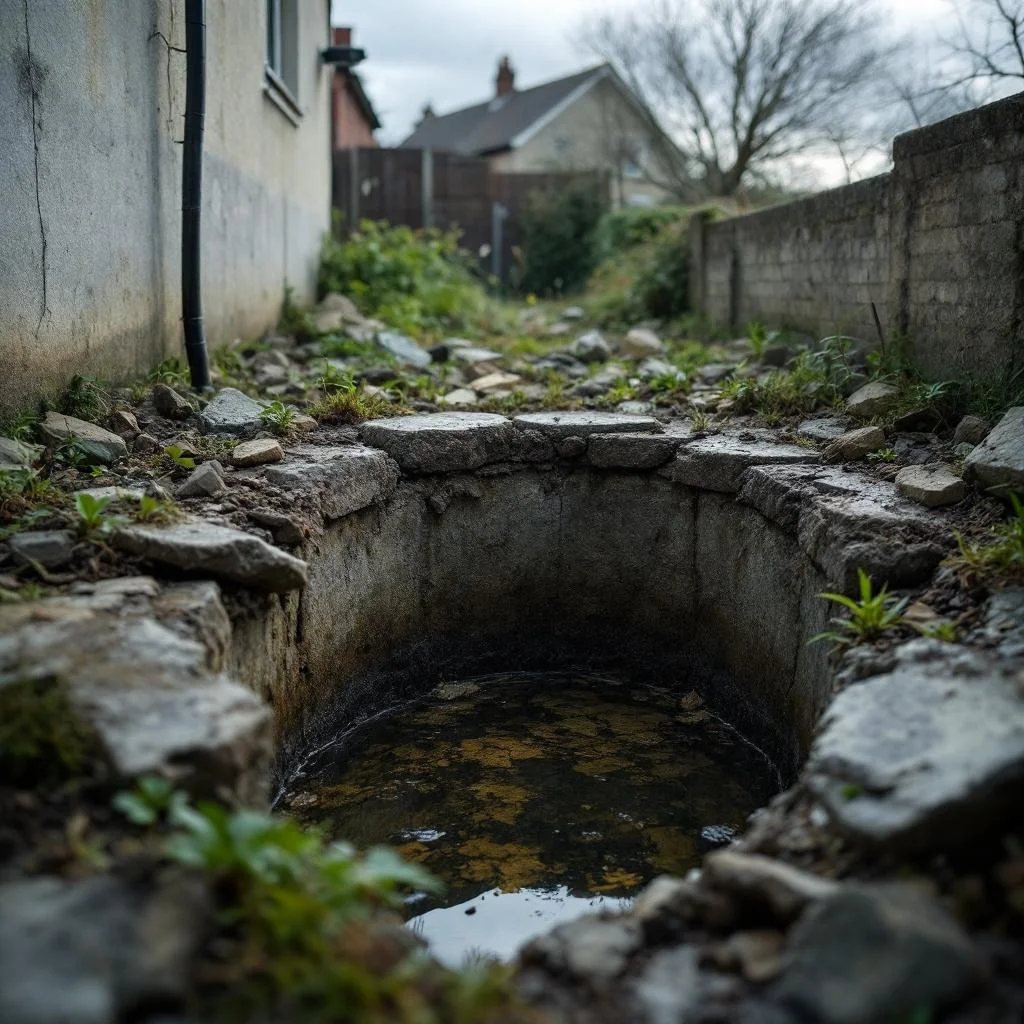
Clay Soil and Drain Pipe Damage in North London
Beyond soakaways, London Clay creates specific problems for buried drain pipes in Barnet, Enfield, and Haringey that are worth understanding alongside the soakaway issue:
Shrink-swell damage. London Clay shrinks significantly in dry summers (the water deficit in North London increases every year as summers warm and rainfall decreases) and swells dramatically when autumn rain arrives. Buried clay drain pipes in the same soil are subjected to lateral loading from this movement, causing fractures and joint displacements that allow root intrusion and groundwater infiltration. See our guide on how London Clay damages drains for a full analysis.
Tree root intrusion. North London's mature suburban tree stock — particularly the large limes, chestnuts, and planes on Barnet and Enfield residential streets — has root systems that follow moisture to drain pipes. Root intrusion through clay-damaged joints is one of the most common findings in CCTV surveys of properties in these three boroughs.
Excavation challenges. Where drain excavation and replacement is required in North London clay, the depth of the clay and its cohesive properties make excavation slower and more expensive than equivalent work in sandy London soils. Drain excavation costs in these boroughs typically run 20–30% higher than the London average for equivalent depths.
Frequently Asked Questions
My soakaway passed a percolation test when it was installed. Why is it failing now?
Percolation test results can vary significantly between summer and winter, between the first and tenth test, and between the test pit location and the actual soakaway position. London Clay's permeability also decreases over time as fine particles from surrounding soil migrate into the pit and block whatever limited drainage existed. A test result from installation date is not reliable after 5–10 years in North London clay.
Can I apply for a Thames Water connection to the surface water sewer?
Yes. Thames Water operates a self-lay or adoptable connection process. You submit a drainage impact assessment demonstrating the current soakaway failure and the proposed connection, and Thames Water assesses whether their network can accept the additional flow. In most Barnet, Enfield, and Haringey areas, there is a surface water sewer available within 30–50 metres of most properties. We handle the technical submission as part of the connection installation.
How deep is London Clay in North London?
London Clay in Barnet, Enfield, and Haringey typically extends from the surface to depths of 50–150 metres. There is no practical prospect of drilling through it to reach permeable strata below for drainage purposes.
Will a larger soakaway solve the problem?
Temporarily, perhaps. A larger pit holds more water but still relies on the same impermeable clay to eventually absorb it. In practice, a larger soakaway in heavy clay fails at the same time of year — just later in the season, when the pit volume is eventually exceeded. The underlying permeability constraint cannot be solved by increasing pit size.
How quickly can you attend a soakaway or drain issue in Barnet, Enfield, or Haringey?
We cover all three boroughs and prioritise urgent jobs for the fastest possible response. For soakaway assessments and drain repairs, request a quote online via our contact form to arrange a site visit.