The question comes up constantly in London property transactions: "We can't find a manhole anywhere on the property — can you still do a drain survey?" The answer is usually yes. Manholes are the most convenient access point for a CCTV survey, but they're not the only one. London properties — particularly Victorian terraces, basement flats, and modern apartments — often have no visible inspection chamber, and surveyors and drainage engineers have developed a range of techniques for accessing the drainage system without one.
Why Many London Properties Have No Visible Manhole
Victorian drainage was designed with the minimum number of access points necessary. In a simple back-to-front terrace drainage layout — kitchen and bathroom at the rear, drain runs to the front, connection to the road sewer — there might be a single inspection chamber at the front of the property and nothing else visible. In densely packed terrace rows, this chamber might be under a flower bed, tarmacked over in the 20th century, or located on a shared party line.
Basement flats frequently have no external access at all. The drainage from a basement flat typically joins the shared drain for the whole building before it exits the property; the inspection chamber for that shared drain may be in the rear courtyard of the property above, accessible only through a gate that requires the freeholder's permission to open.
Modern apartment buildings use a different system entirely — soil stacks connect at each floor, collecting waste into a main drain that exits at basement level. There may be no traditional inspection chamber within the apartment, and access to the building's drainage is controlled by the management company.
Drain Survey Without a Manhole: Alternative Access Points
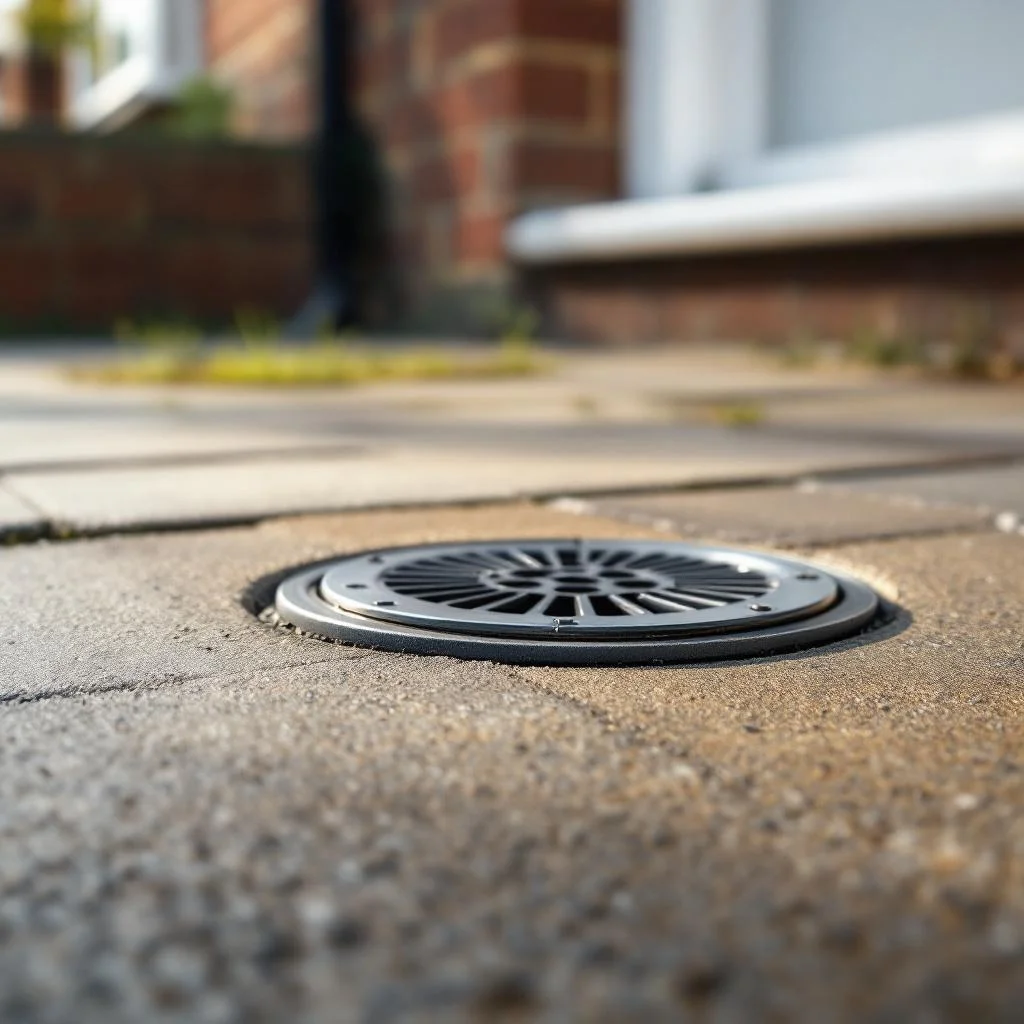
Rodding eyes. A rodding eye is a small, circular access fitting — typically 100mm diameter — fitted into the drain at a junction or bend. It's sealed with a screw cap and is designed specifically for pushing a rod (or a camera) through without opening a full inspection chamber. Rodding eyes are commonly found at the base of downpipes, at the rear of a kitchen drain stack, and at the point where the drain transitions from internal to external.

They're easy to miss — they sit flush with paving or render and aren't marked. On a pre-purchase survey, we specifically check along the rear of the property and at all downpipe bases for rodding eyes that may not be visible at first look.
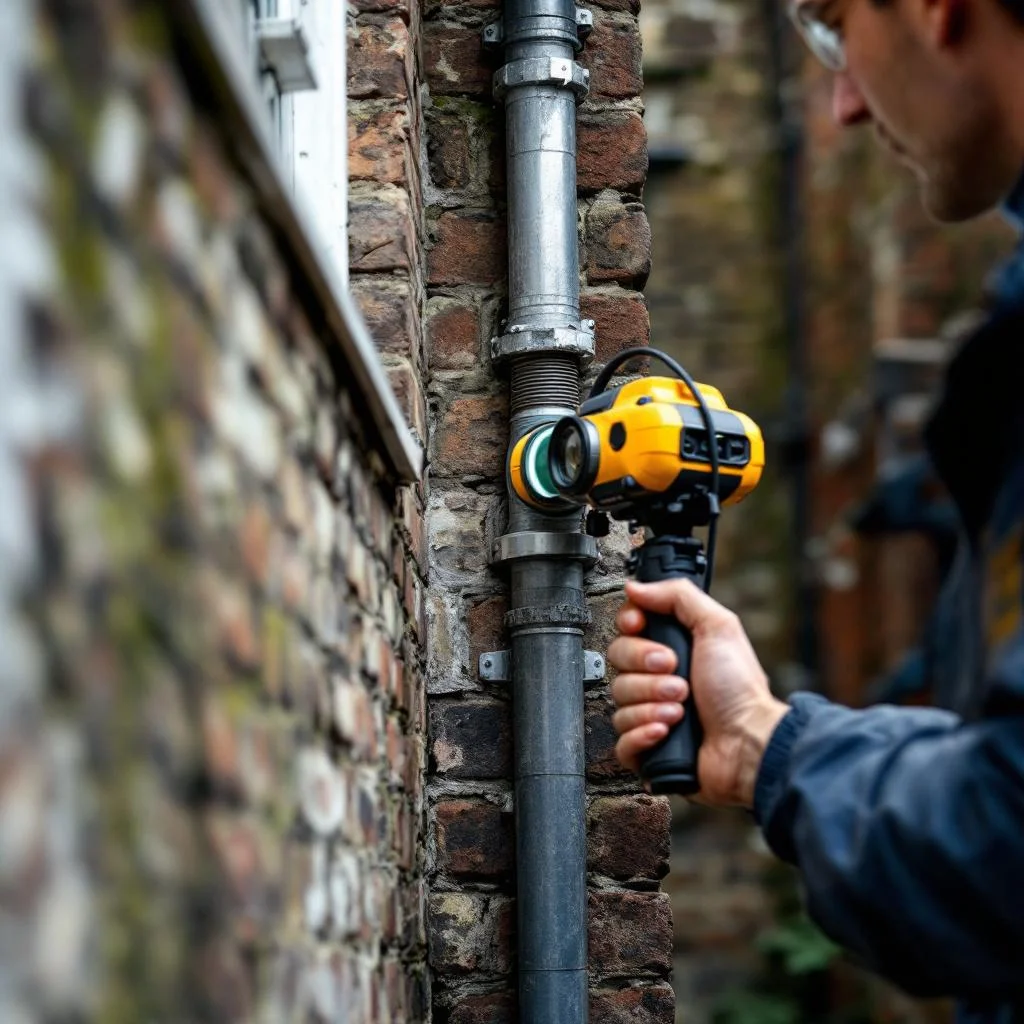
Soil stack or downpipe access. A CCTV push-rod camera can be fed into the drain system through the top of a soil stack or through a ground-level cleanout in the external stack. This is a common approach in flats where the only accessible point is the external stack at the rear of the building.
Upstream from a neighbour's chamber. With permission, accessing a shared drain from a neighbouring property's inspection chamber and running the camera upstream allows a survey of the drain serving your property. This is particularly relevant for mid-terrace properties where inspection chambers alternate between properties along a shared party drain.
Under-floor access. In some Victorian terraced houses, the drainage runs beneath a suspended timber ground floor. An access hatch in the floorboards or a lifting of a section of floor can reveal a drain junction or rodding eye that allows camera access. This is used as a last resort when no other access exists.
Camera insertion through a WC pan. A small-diameter push-rod camera can be inserted through a toilet bowl and into the soil stack from inside the property. This is restricted in terms of direction and distance, but can confirm immediate blockage location or basic pipe condition close to the property.
What a No-Manhole Survey Can and Can't Achieve
The primary limitation of a survey conducted without a manhole is coverage. A survey conducted from a rodding eye at the rear of the property will cover the run from that point to the front of the property — but may not capture the junction with the public sewer, any side branch drains, or the condition of the drain in the opposite direction.
A survey from a soil stack access will capture the stack condition and the drain immediately downstream, but not branches serving other parts of the property.
For a conveyancing survey where you need to demonstrate due diligence, a partial survey conducted professionally — with the report clearly stating the access point used, direction of survey, and extent of coverage — is generally acceptable to solicitors and lenders. It is better than no survey at all. The surveyor should note which sections were not accessed and recommend follow-up access if significant defects are found within the surveyed section.
When to Install an Access Chamber
If a property has no accessible inspection chamber and the drainage system is older than 40 years, installing a new access chamber is worth considering — both as a maintenance asset and as an insurance against future blockages. A new polypropylene inspection chamber can be installed in a day, at a cost that depends on depth and surface type. The investment pays for itself the first time a blockage occurs and an emergency team can access the drain immediately rather than spending time hunting for an alternative entry point.
Our CCTV drain survey service includes an assessment of access provision as part of every survey report.
What a No-Manhole Survey Costs in London — What Moves the Price
Pricing for a no-manhole survey is one of the most common questions we get from buyers and conveyancing solicitors, and the answers in online directories are usually too vague to be useful. The variables that move the price between access scenarios are predictable.
Best-case rodding-eye access — the cheapest end of the market. A two-bedroom Victorian terrace in Tooting, Hackney, or Peckham with a single rear rodding eye, no neighbour permissions needed, single direction of survey, single floor of property. The engineer arrives, locates the eye in 10 minutes, runs the camera, and produces a written report with screen-grabs the same day. This is what most Zone 2–4 mid-terrace pre-purchase surveys look like.
Multi-access standard survey — priced above the best case. A larger Victorian property — a four-bedroom Wandsworth terrace, an Islington town house — where the engineer needs to access both a rear rodding eye and a front downpipe to capture full coverage, or where access through the WC pan is needed in addition to external access. Time on site is roughly 90 minutes rather than 45.
Difficult-access flat or basement survey — priced higher again. A converted Edwardian flat in Maida Vale or Earl's Court where access requires the freeholder's permission, the chamber is in the rear courtyard of an upper-ground flat, or push-rod camera access through a soil stack at first-floor level is needed. Pricing reflects the time spent coordinating with managing agents and the equipment for vertical-stack access.
Temporary access creation — the most involved and highest-priced scenario. Properties where no functional access exists and the engineer needs to install a temporary cleanout, lift paving to expose a buried chamber, or arrange adjoining-property access via a neighbouring inspection chamber. Pricing here always includes a written quote in advance.
Two factors push prices up: short-notice scheduling and reports formatted for solicitors and lenders, which take longer because of the schedule of defects and photographs they require. Booking a survey in a postcode where we already have a job that day will sometimes reduce the price. For an itemised breakdown, our CCTV drain survey pricing page explains what drives the price.
FAQ
Will a pre-purchase survey cover the whole drainage system if there's no manhole?
Not necessarily. The surveyor will access what is accessible and the report will state the extent of coverage. A partial survey is valid and useful — it's not a reason to refuse to proceed with a survey.
Can Thames Water tell me where my drainage runs?
Thames Water sewer maps show public sewers. They don't show private drains, which are the property owner's responsibility. A CON29DW drainage search shows public sewer positions but won't map your private drainage layout.
What if there's a blockage and no accessible manhole?
We locate the nearest upstream rodding eye or downpipe access and work from there. In some cases we may need to create a temporary access point — a cleanout connection at a drain junction — to reach the blockage.
Do I need planning permission to install an inspection chamber?
Installing a new inspection chamber in your garden or under a path is not normally a planning matter — it's permitted development. If it involves excavation within two metres of a public sewer, a build-over agreement with Thames Water may be required.
How much does a no-manhole CCTV survey cost?
The cost is broadly similar to a standard residential survey, and depends on complexity and the number of access attempts required. Request a quote online via our contact form or visit our CCTV drain survey page to arrange.